What a Government Shutdown Means for Your Portfolio
Oct 28
3 min
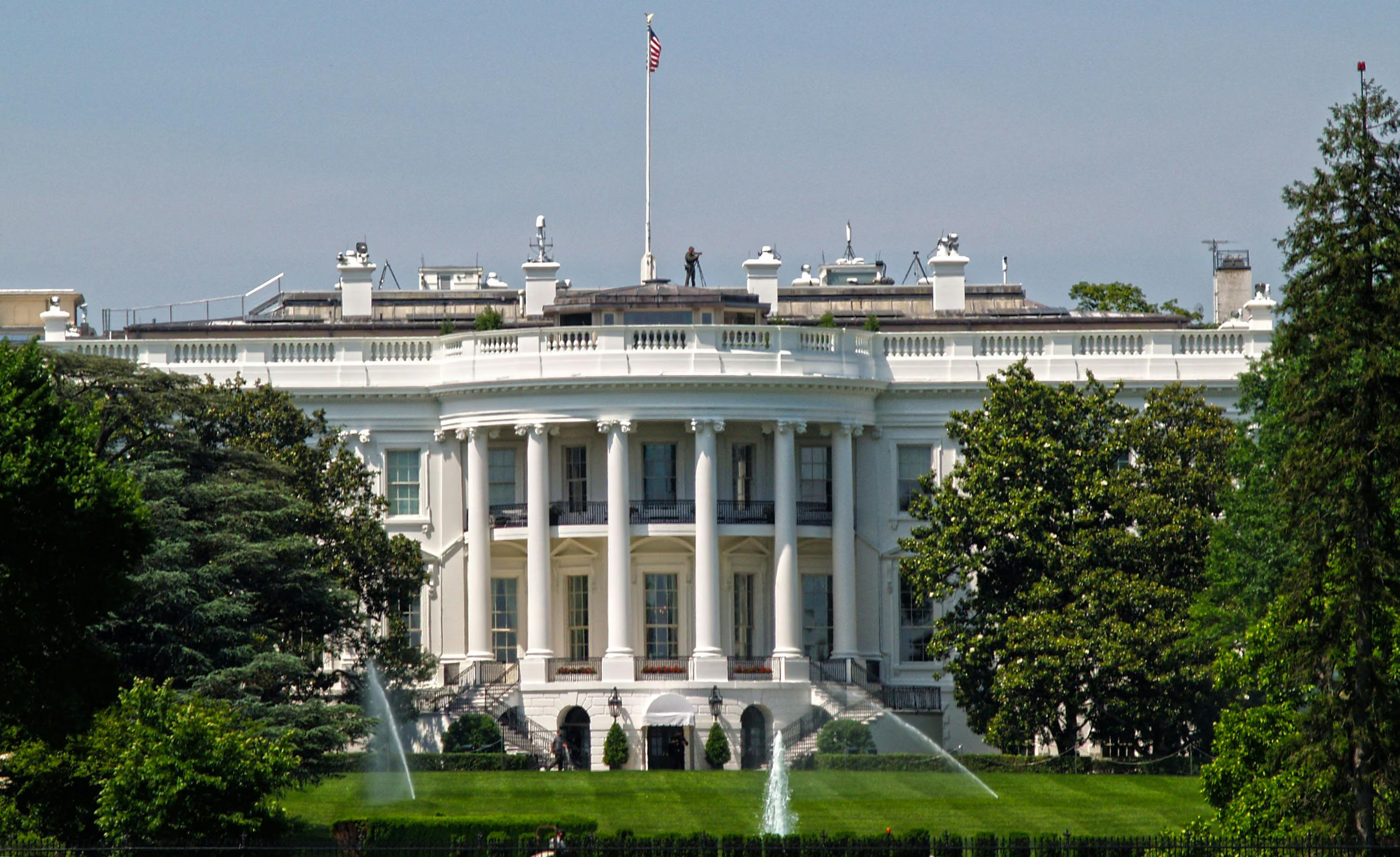
Lately, several clients have been reaching out with a pressing question: “How is this government shutdown going to affect me?” It’s a fair concern. Flights are being delayed, frustrations are rising, and the news makes it sound like everything is grinding to a halt.
But like most economic questions, the answer isn’t simple.
The Ripple Effect of a Shutdown
Government shutdowns are complex. They affect many people, especially federal employees, but for the average investor or retiree, the impact is often indirect.
To understand it, think of a scene from Mission Impossible III. Tom Cruise’s character, pretending to work for the Department of Transportation, explains that if you tap the brakes on a freeway, you can literally see the ripple effect of that action stretch for hundreds of miles. Traffic, he says, “has a memory.”
The economy works the same way. A government shutdown acts like a sudden brake tap, slowing things down and creating ripple effects that spread far and wide. The longer it lasts, the larger those ripples become.
When you combine that with other economic pressures such as tariffs, global uncertainty, or rising unemployment, the ripples start to overlap and amplify each other.
What It Means for Clients and Retirees
For most clients, the immediate effect of a shutdown is small. Maybe the fourth quarter slows down a bit; maybe it bounces back in the first quarter. But the bigger question is how these ripple effects interact over time, especially for retirees living on fixed incomes and drawing from their portfolios.
The truth is, we don’t know exactly how this will play out. No one does.
What We Can Do: Stay Diversified and Stick to the Plan
While we can’t predict every outcome, we can prepare for a wide range of them. That’s why portfolios and withdrawal strategies are built to be diverse and able to handle many possible futures without relying on any single bet or assumption.
It would be nice if the solution were as simple as “buy gold when uncertainty rises,” but it’s not. The economy is too interconnected for any one move to guarantee protection.
Instead, the best course of action is to stay grounded in proven financial principles:
- Maintain diversification across asset classes
- Keep withdrawal rates at sustainable levels
- Prioritize tax efficiency where possible
- Avoid reactive decisions based on short-term headlines
These are the things within our control, and they are what help shield retirements through periods of uncertainty like this.
The Bottom Line
Government shutdowns may cause turbulence, but a well-constructed, diversified plan is designed to weather it. The recommendation remains the same: no big bets, no panic.
Stay diversified. Stay disciplined. Trust the plan.
That’s how we protect our clients, not just now, but through whatever ripples may come next.


Matthew Davis, CFP®
With a breadth of knowledge across many disciplines, Matthew is responsible for coordinating amongst our various specialists as well as outside counsel to ensure your plan comes together seamlessly. Additionally, he is jointly responsible for managing all of Sherwood's investment strategies.
LinkedIn
*Sherwood Financial Partners, LLC (“Sherwood”) is a registered investment adviser located in Westlake Village, California. Sherwood may only transact business in those states in which it is registered, notice filed, or qualifies for an exemption or exclusion from registration requirements. Information presented is for educational purposes only and does not intend to make an offer or solicitation for the sale or purchase of any specific securities, investments, or investment strategies. Investments involve risk and, unless otherwise stated, are not guaranteed. The information contained herein is not intended to convey or constitute legal or tax advice. Be sure to first consult with a qualified financial adviser, legal professional, and/or tax professional before implementing any strategy discussed herein. Past performance is not indicative of future performance. Principal value and investment return will fluctuate. There are no implied guarantees or assurances that the target returns will be achieved or objectives will be met. Future returns may differ significantly from past returns due to many different factors. Investments involve risk and the possibility of loss of principal.
*Sherwood may discuss and display charts, graphs, and formulas; these are not intended to be used by themselves to determine which securities to buy or sell or when to buy or sell them. Such charts, graphs, and formulas offer limited information and should not be used on their own to make investment decisions.
*Sherwood may discuss and display charts, graphs, and formulas; these are not intended to be used by themselves to determine which securities to buy or sell or when to buy or sell them. Such charts, graphs, and formulas offer limited information and should not be used on their own to make investment decisions.